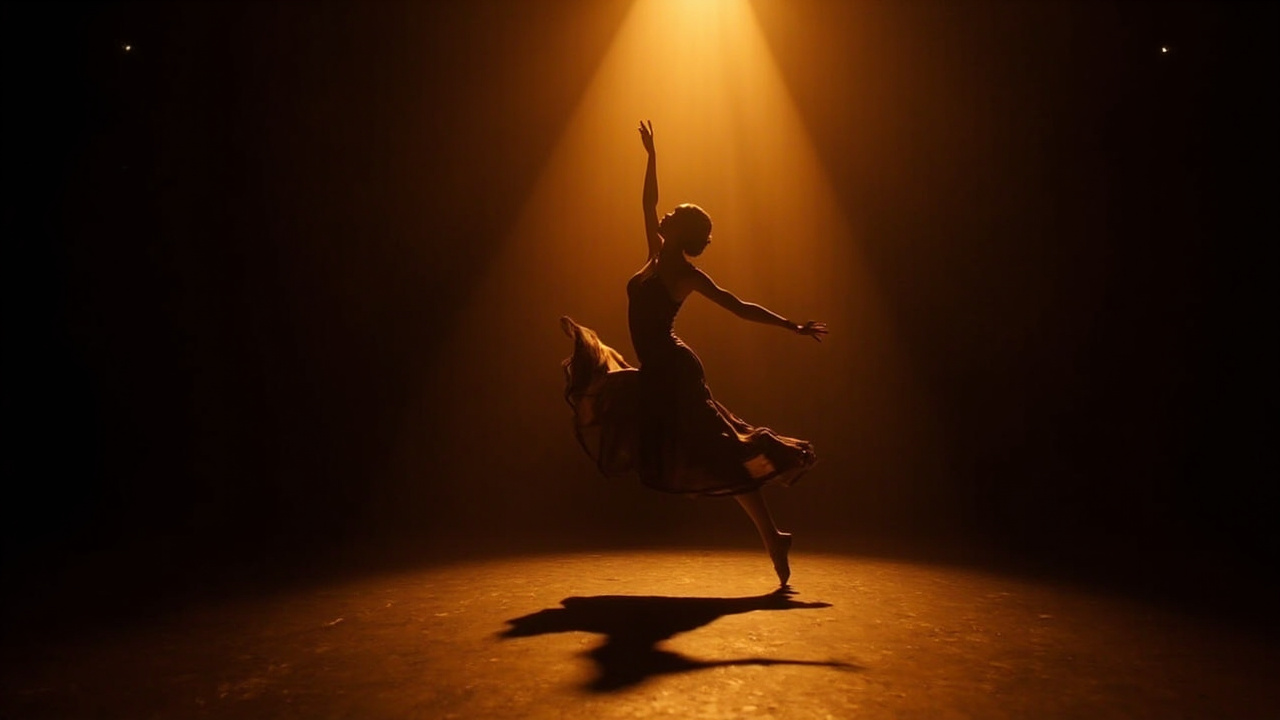
Most boss fights are checklists. Learn the moves, dodge the tells, burn the health bar, win. The Dancer, a boss encounter in Remedy's recently released open-world action game Control Resonant, breaks that pattern. The encounter is built to teach you how to play it, then test whether you actually learned.
That is rare. It is also why the fight is worth examining.
The short version
- The Dancer is a boss in Remedy's open-world action game Control Resonant.
- The fight has two phases, with the first acting as a rehearsal for the second.
- The arena is a theater, with the boss framed as a performer practicing a routine.
- Winning requires slowing down, reading patterns, and matching the boss's pace.
- Button-mashing approaches backfire; the author's performance degraded with repeated failed attempts.
The fight punishes what most action games reward
The author's account shows the trap clearly: spam air attacks, clear phase one fast, then get demolished in phase two. That loop repeated four or five times. Tilt set in. Damage taken went up, damage dealt went down, and eventually even the easy opening phase started failing. The Dancer punishes exactly the behavior most action games reward: aggressive combo chains and constant aggression.
Once the player slowed down and watched the boss's moves, the fight opened up. The first phase is not a speed bump. It is a tutorial dressed as a fight.
The theater framing is not just set dressing
The arena is a stage surrounded by audience figures frozen mid-performance. The Dancer hops and chassés rather than charges and slams. Every visual choice is pushing you toward the answer: do not fight this monster, dance with it. Once you match the boss's tempo, the second phase stops being a wall and becomes a duet.
This is what theme-first boss design looks like in practice. The encounter, the setting, and the mechanic are the same idea expressed three different ways.
Who should care
| Situation | Recommendation |
|---|---|
| First attempt at The Dancer | Treat phase one as mandatory study time, not a warm-up |
| Dying repeatedly in phase two | Return to phase one and clear it without taking damage |
| Getting frustrated and playing worse | Stop. The fight punishes tilt. A break helps. |
| Still struggling after multiple tries | Use difficulty sliders if needed—Remedy included them for a reason |
| Want to speedrun or optimize | Watch for community routes; expect rhythm-matching over damage-stacking |
Our analysis
Boss fights in action games have largely converged on two templates: the big health-bar damage sponge, and the multi-phase escalation test. Both work, but neither teaches. The Dancer is interesting because it treats the first phase as a tutorial encounter and the second as a graduation exam. That is closer to a fighting game's round structure than a typical action-game boss.
Remedy has a track record of letting environment and story do mechanical work. The original Control's light-combat system did something similar at a smaller scale—understanding the fiction made you better at the combat. If Control Resonant carries this design philosophy through the rest of its boss roster, the game could end up being a reference point for how to handle difficulty without leaning on health pools or cheap one-shot mechanics.
The design does raise an accessibility question. Rhythm-matching and pattern-reading fights can be unplayable for players with certain disabilities, and how Remedy balances "mastery through observation" with "accessible to all" will be worth watching.
What to watch next
Watch for community speedruns of The Dancer. If optimized routes rely on rhythm-matching rather than damage-stacking, that confirms the design works as intended. Also watch for player discussion around accessibility and whether difficulty options are sufficient for the broader audience.
Key takeaways
- The Dancer is a two-phase fight built around rhythm and observation, not damage output.
- Phase one is a tutorial. If you can clear it cleanly, phase two becomes a question of tempo.
- The theater framing is the design hint: match the boss, do not out-damage it.
- This is a strong example of theme-driven boss design and worth studying.
- Difficulty sliders exist if you need them.
Frequently asked questions
What is The Dancer in Control Resonant?
It is a boss encounter set in a theater, designed around rhythm and pattern recognition.
Why do I keep dying in phase two?
Most likely because you are playing too aggressively. Slow down, read the moves, and match the boss's pace.
Can I just brute-force the fight?
The design punishes that approach. Players who slowed down and observed cleared the fight more consistently than those who pushed hard.
Are there difficulty options?
Yes, the game has difficulty sliders. Use them if you need them—the fight is designed around a specific approach, not a specific skill floor.
Is The Dancer a good boss fight?
Based on the account, it stands out as an example of theme-driven design that ties narrative setting to mechanical teaching.